Ancient Stones on a Windblown Fell
Birkrigg Stone Circle: A Double Ring of Mystery in Cumbria’s Wilds
20 June 2025
Birkrigg Stone Circle in Cumbria is a Bronze Age double-ring mystery rich in archaeology, folklore, and unanswered questions.
High on Birkrigg Common’s limestone plateau, where the wind howls through bracken and the distant hum of Morecambe Bay mingles with the scent of wild grasses, an ancient secret endures.
Here stands Birkrigg Stone Circle — a modest yet powerful monument. Not as grand as Castlerigg or as precise as Stonehenge, it is a puzzle waiting to be solved.
With each stone and shifting shadow, the site whispers fragments of a forgotten age. Step closer and the wind seems to carry echoes of the past.
Unearthing the Past
The first excavation took place in 1911. Archaeologists Charles Gelderd and John Dobson uncovered a surprising structure beneath the circle.
Below twelve weathered limestone stones, they found a cobbled pavement. The discovery raised immediate questions: was it a stabilising base, or a ceremonial path for mourners and celebrants?
Among the stones lay fragments of Collared Urns and five sets of cremated human remains. These ashes, cradled in faded pottery, suggested the site once served as a place of ritual or remembrance.
A Second Dig
In 1921, a decade later, the North Lonsdale Field Club returned to Birkrigg. Their finds deepened the mystery.
A smooth, pear-shaped stone may have been used to grind pigments. An oyster-shaped stone, hollowed at the centre, could have been a palette for mixing ochre.
A small speck of red ochre — vivid against the dark earth — hinted at ancient rites. Perhaps it was used to decorate the dead, mark the stones, or stain ceremonial garments.
A Victorian Sketch
Another clue comes from 1839. A rough pencil sketch, believed to be by local geologist John Bolton, shows ten stones in the inner circle — the same number visible today.
Two additional stones appear to the east and west, possibly remnants of the outer ring or ritual markers. Below the circle, a V-shaped group and a semicircular feature are also drawn.
Whether these marks represented natural features or imaginative flourishes remains unclear. The sketch, like the site itself, raises more questions than it answers.
The Outer Ring’s Ghost
Today, only a broken arc of fifteen stones survives. The original outer ring spanned roughly 25 metres. No one knows whether the circle was ever completed or slowly eroded over time.
For years, the site was romantically called the “Druid’s Circle.” That idea has long since been debunked. Druids lived more than a thousand years after Birkrigg was built.
Its true origin lies firmly in the Bronze Age, centuries before Celtic mystics walked these lands.
Folklore and Legend
Birkrigg is not only an archaeological site — it is also a landscape woven with stories.
Local lore tells of a travelling circus whose elephant died while passing through. Legend claims it was buried on the common under cover of darkness.
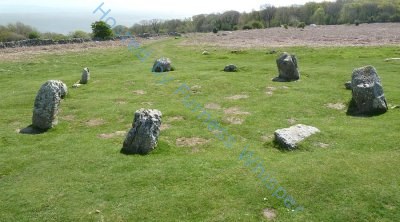
At dawn, the circle feels alive. The breeze stirs the bracken. Curlews cry overhead. The stones cast long shadows. When you touch the weathered limestone, pitted and soft with age, it feels as if the past is resting beneath your hand.
A Fragile Monument
Birkrigg is a Scheduled Monument, protected but vulnerable. Frost cracks the limestone, and vegetation creeps over the cobbles.
The earliest archaeologists relied on the stories of local farmers who unearthed “stone axes” in nearby fields. Now, its care depends on visitors and communities.
Every photograph, report of erosion, or careful footstep helps keep this ancient story alive.
The Silent Dialogue of Stones
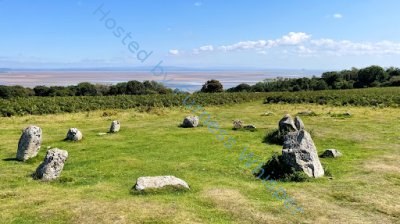
Birkrigg’s power lies not in clear answers but in enduring questions.
Each stone, each shard of pottery, and each whispered legend is a piece of a long-lost world. As the sun sinks behind the fells, the circle seems to breathe.
Some monuments are not meant to be solved. They are meant to be wondered at.
Explore the Birkrigg Stone Circle in 3D:
https://skfb.ly/pxHGN
100%